


Introduction
The past several U.S. presidential elections have become increasingly divisive, and the 2024 election is no exception. The first debate between Former President Trump and Vice President Harris only underscored the heightened emotions surrounding this election. In today's political climate, voting has evolved into a deeply personal and emotional experience for many Americans.
As investors, we often hear that it's essential to remain calm and keep our emotions in check, especially through varying economic cycles, interest rate changes, and shifts in political regimes. Yet, despite our best efforts, we are human. And as humans, emotions are an intrinsic part of our decision-making, sometimes surfacing even when we strive to act rationally. This emotional tug-of-war plays out in the markets as well. Just like us, markets can be unpredictable and reactive, particularly during election cycles. Human emotions can drive volatility, and volatility can, in turn, amplify emotions. It’s a cycle that makes navigating election years as an investor uniquely challenging.
Understanding Market Volatility and Election Cycles
Election years often bring heightened emotions, and markets can reflect that uncertainty in the form of increased volatility. The chart illustrates how the VIX, which measures market expectations of near-term volatility, tends to rise significantly in the months leading up to Election Day. This pattern indicates that investors anticipate more market turbulence as election results unfold and new policies begin to take shape.
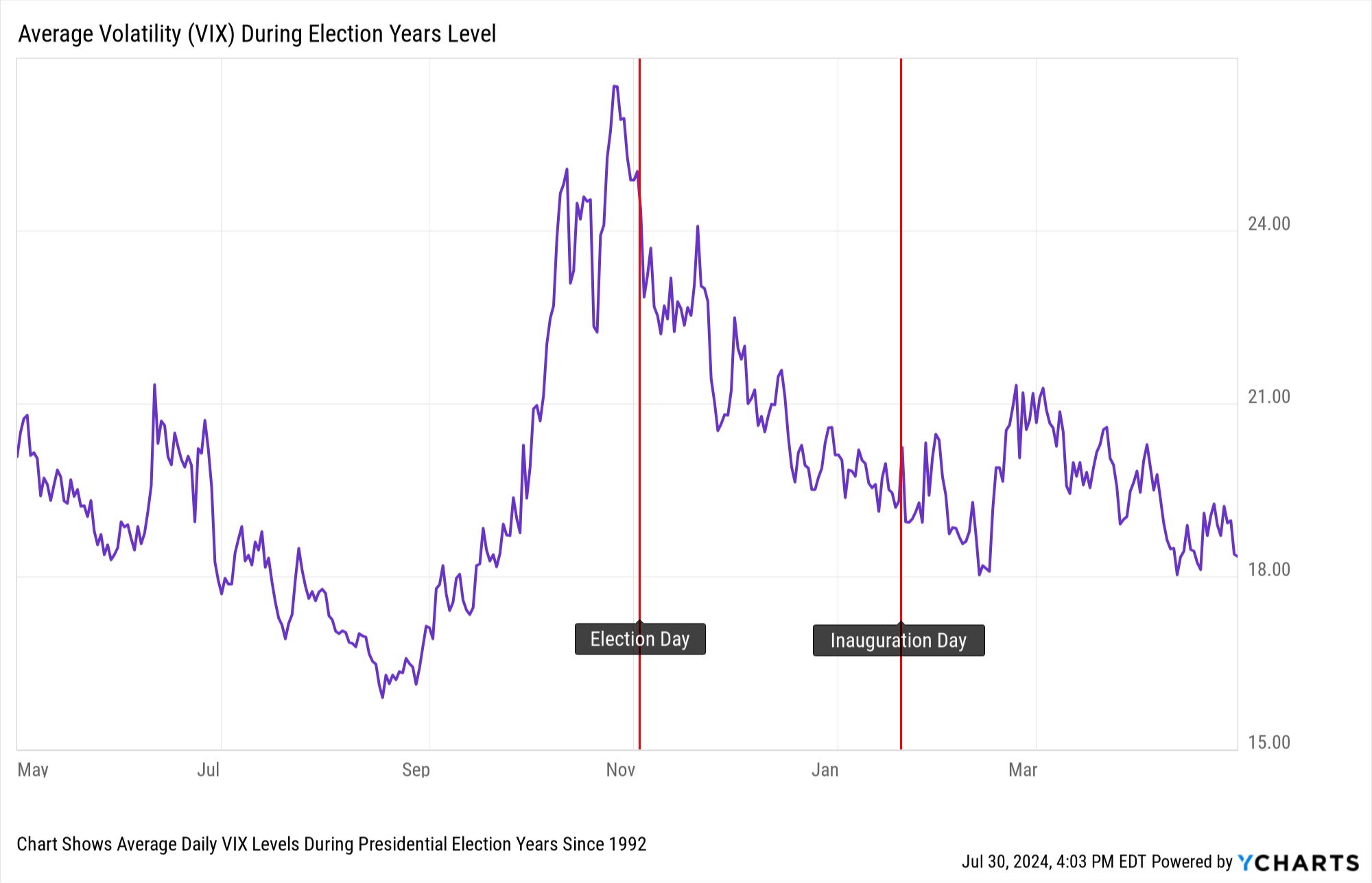
This increase in volatility is a natural reaction to the uncertainty surrounding potential policy shifts. Markets don’t respond solely to who wins the election but to the range of possibilities that exist leading up to it. These spikes in volatility don’t necessarily signal a market downturn; rather, they reflect investor uncertainty about future events. Despite this short-term volatility, the longer-term outlook for the market often stabilizes after key election events, such as the inauguration. While the market may fluctuate as policies are clarified and implemented, the underlying economic factors, such as corporate earnings and interest rates, will ultimately play a larger role in long-term market performance. For investors, understanding that volatility is expected during election cycles can help prevent emotional reactions to short-term swings.
The Importance of a Long-Term Perspective
Volatility during election cycles can be unsettling, and it’s understandable that some investors may feel tempted to adjust their portfolios during these periods. However, it’s important to consider the long-term impact of trying to time the market.
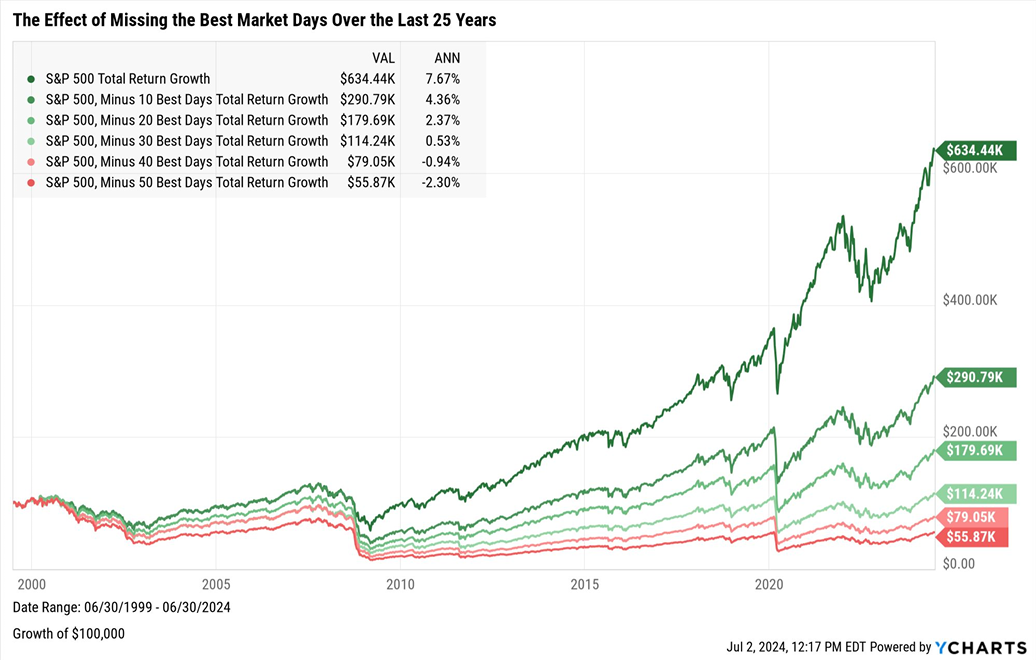
The chart illustrates the effect of missing just a few of the best-performing days in the market. Over the past 25 years, an initial investment in the S&P 500 grew significantly when an investor remained fully invested. However, missing the 10, 20, or 50 best days substantially reduced the overall growth of that same investment. This highlights how staying invested during volatile periods can be crucial to participating in market recoveries.
While no one can predict which days will deliver the most growth, history shows that trying to avoid short-term volatility by exiting the market can lead to missing key opportunities. It’s important to maintain a well-diversified portfolio that aligns with your individual risk tolerance and financial objectives.
Avoiding Emotional Decision-Making
Investing is inherently tied to emotions, especially during periods of market volatility. However, reacting to short-term market fluctuations driven by political events can disrupt a well-thought-out investment plan. When market volatility increases, some investors may be tempted to make abrupt changes to their portfolios. Instead, maintaining a steady approach based on long-term financial goals can help avoid unnecessary risk.
While it’s natural to feel uncertain during times of market volatility, it’s important to stay informed and keep focused on the bigger picture. Election outcomes are just one of many variables that can impact market performance in the short term. Maintaining regular communication with your financial advisor and periodically reviewing your financial plan can provide guidance and reassurance during uncertain times.
Conclusion
Market volatility during election cycles is a natural occurrence, but it does not necessitate a change in long-term investment strategy. By keeping emotions in check and focusing on well-established financial goals, investors can navigate periods of uncertainty with greater confidence. As with any major financial decision, it’s wise to consult with a financial professional to ensure that your portfolio is appropriately aligned with your individual risk tolerance and time horizon.
The opinions voiced in this material are for general information only and are not intended to provide specific advice or recommendations for any individual. All performance referenced is historical and is no guarantee of future results. All indices are unmanaged and may not be invested into directly. No investment strategy assures a profit or protects against loss.